Am I a candidate for vitiligo surgery?
Only if your disease has been stable for about twelve months: no new patches, no expansion of existing ones, and no depigmentation appearing where skin has been cut or scratched.
Segmental vitiligo that has burnt out is the classic good candidate. Patches on the lips, fingertips and other sites that light cannot reach are the usual reason for choosing surgery.
How does skin grafting for vitiligo work?
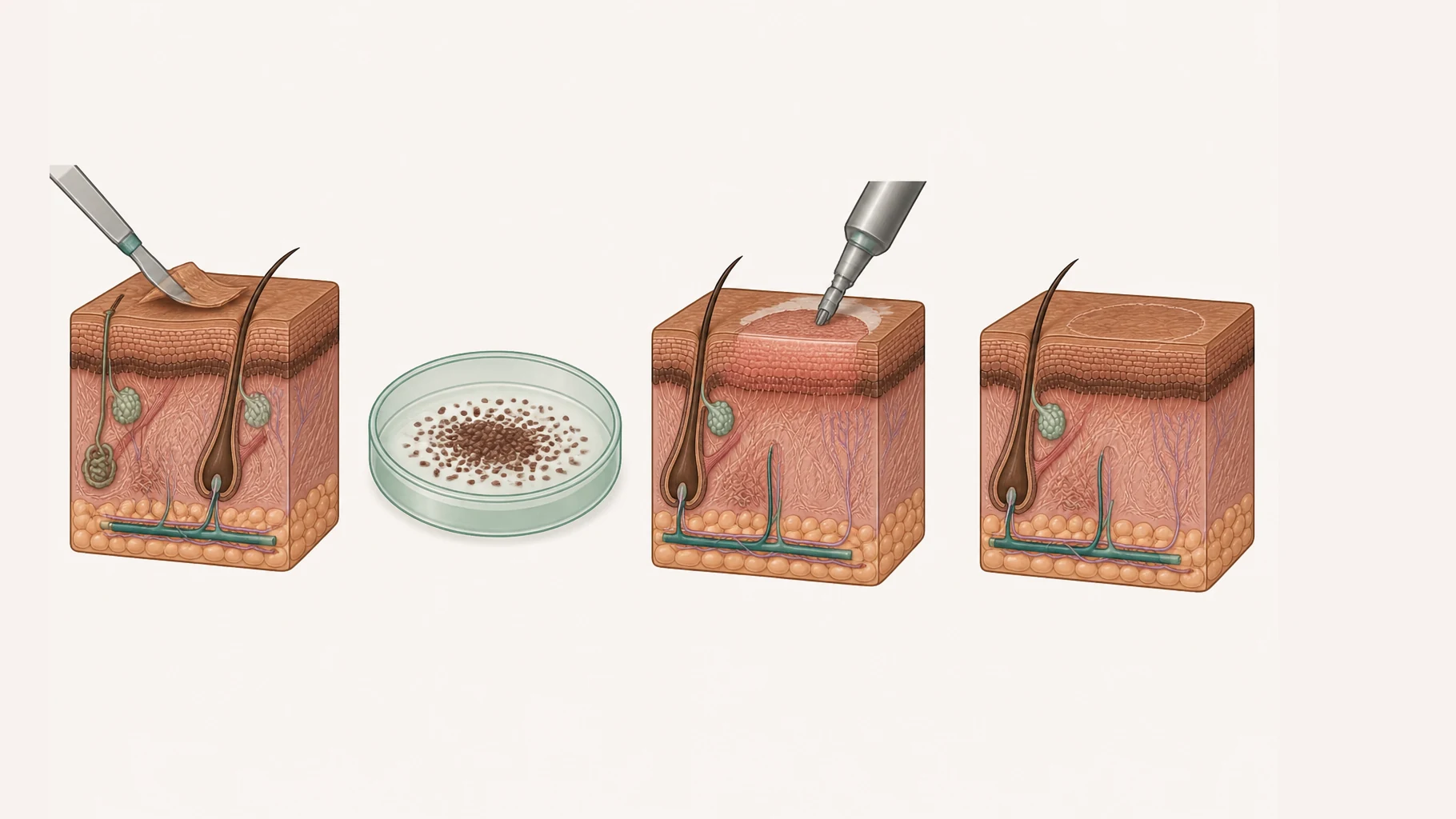
Pigment cells are taken from skin that still has them, usually the thigh, and moved to the patch that has none, as a suspension of cells, as tiny plugs, as the roof of a suction blister, or as hair follicles. They settle into the prepared patch and begin producing pigment again over the following weeks.
Melanocyte transplant or punch grafting: which is better?
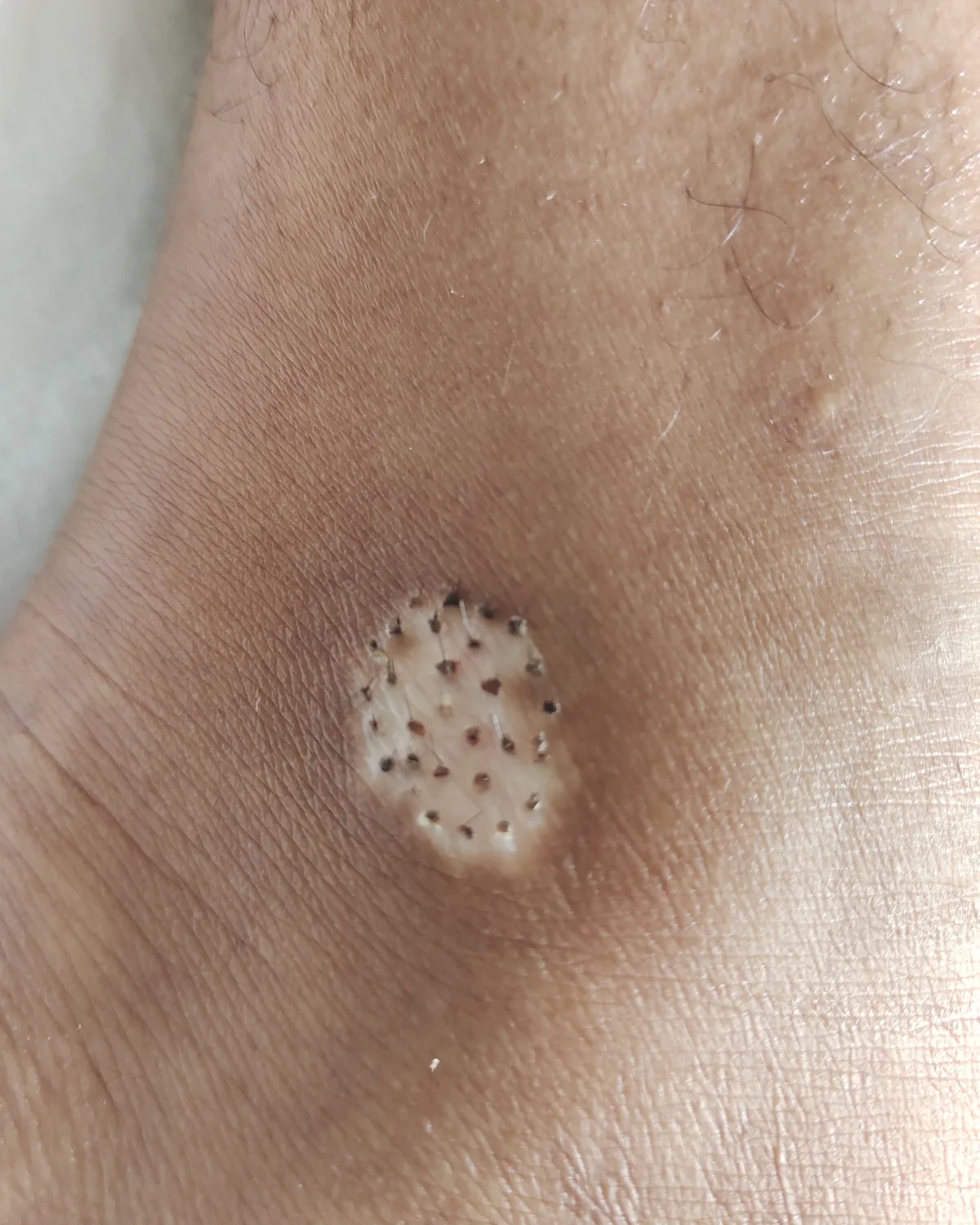
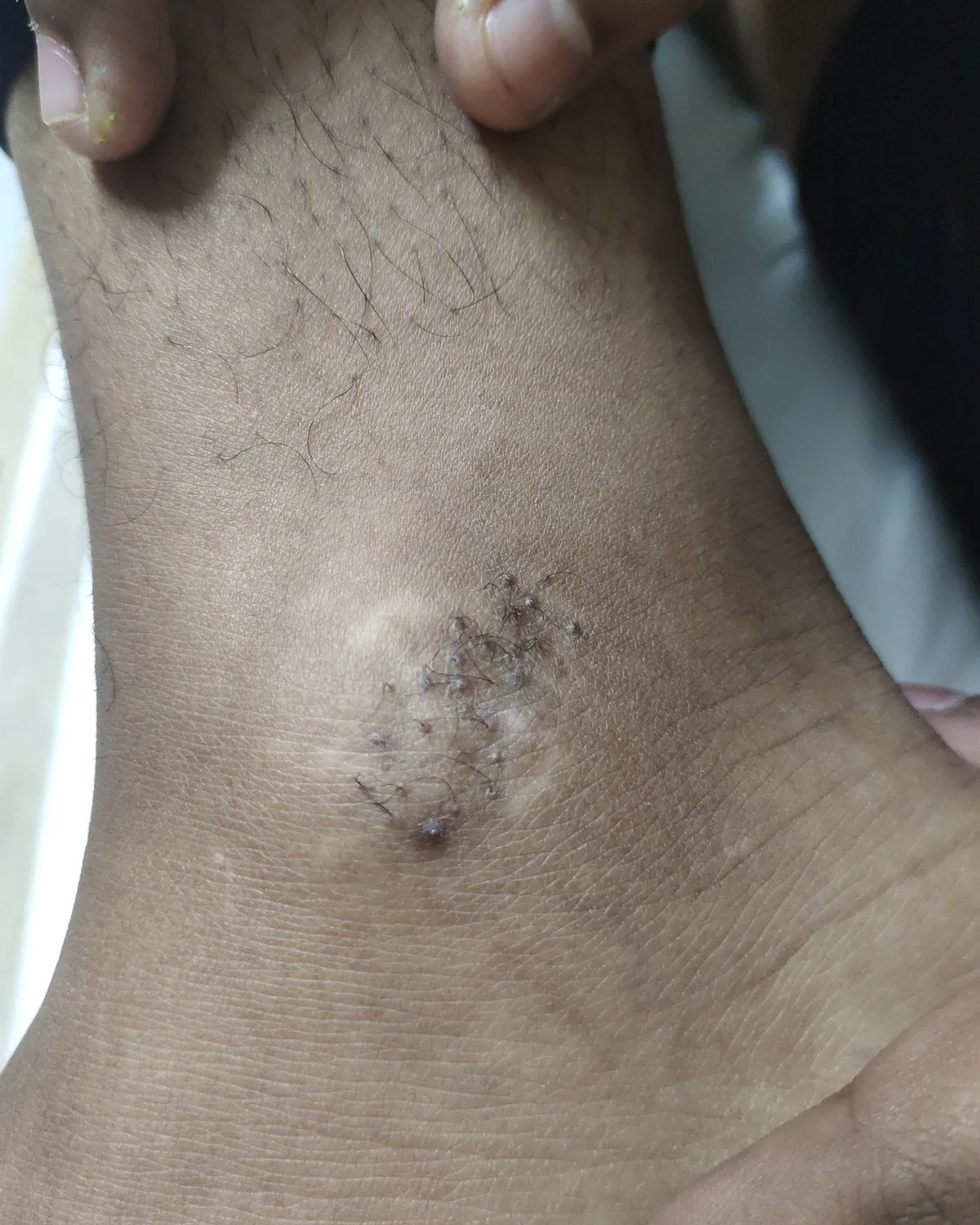
Neither, in general. Cell transplant covers the most area from the smallest donor site and blends smoothly, so it suits larger patches. Punch grafting is simple and durable and suits small patches on fingers, ankles and knees, at the risk of a cobblestoned surface. Blister grafting gives the finest match on the lips and eyelids. The patch chooses.
Is the result permanent?
The transplanted pigment cells generally persist, and results in stable segmental disease are durable over years. But vitiligo can reactivate, and a graft does not protect against new patches elsewhere.
Will the colour match?
Usually well, because the pigment is your own. It matures over months. Punch grafting can leave a slightly uneven texture; melanocyte transplant and blister grafting generally blend better.
Does it leave a scar at the donor site?
Blister grafting leaves very little. Punch grafting leaves small marks in a concealed area. The donor site is chosen so that anything visible is hidden by clothing.
Is it done under general anaesthetic?
No. Local anaesthetic, as a day procedure. You go home the same day.
How soon will I see colour?
Pigment usually starts appearing within a few weeks and continues to spread and even out for several months. Judging the result before three months is premature.
How much does skin grafting for vitiligo cost in India?
It is quoted per procedure, in writing, after the assessment, because the price depends on the area, the technique and the number of sittings. The consultation fee is the only figure that is fixed, and it is published on the cost page. Be wary of any clinic that prices a graft before it has examined you.
Is vitiligo skin grafting available in the UK?
Rarely, and mostly privately: the Vitiligo Society’s own guidance describes surgical treatment as seldom used in the UK. Patients from the UK and the Gulf do travel to India for it. The assessment rule is identical wherever you come from, and a video consultation before travel is how you find out whether the trip is worth making.
What if my vitiligo isn’t stable yet?
Then surgery is deferred and the disease is treated medically first. The waiting period is not wasted. It is used to stop the spread and to build the photographic record that establishes when the clock started.