Chronic
Vitiligo
Repigmentation is scored by the proportion of the patch that has recoloured and where it started from. Perifollicular islands, or inward from the edge.
- Patch area and site
- Whether spread has stopped
- Colour match at the margin

Every image on this page is a real patient who signed a consent form for it to be published. Where no consented image exists, there is no image — nothing here is stock photography and nothing here is an illustration.
Before-and-after photographs are the most persuasive thing a dermatology practice can publish, and the easiest thing to misuse. Indian Medical Council advertising rules are strict about it, and rightly so.
The rule here is simple and absolute: an image appears on this site only if the patient signed a written consent for that specific use. Not a general clinical consent. A publication consent. Withdrawal is honoured immediately, no reason required.
That means this page fills in slowly. It also means everything on it is real.

Dr. (Lt Col) Khagendra Varada
Reg. No. 10461, Hyderabad State Medical Council
Full background →“I have been going pillar to post to get my son cured of his white spot on his left side of lip and chin. It appeared 8 years back. I was told it’s special type of nerve vitiligo which has no cure. After reporting to him he told us that it is SEGMENTAL VITILIGO and unlikely and difficult to be cleared by medications alone. He suggested for surgical melanocyte transplant… I was amazed after around one month that he started rapidly getting pigmentation. I wholeheartedly suggest please do not waste time like I did.”
“Dr. Varada is an incredibly patient, knowledgeable and wonderful doctor. He sorted out an issue that I had been dealing with for years in one appointment and there’s been no looking back since!”
Every case the clinic has consent to show. Each one is photographed in the same position at every visit, so the two pictures can be compared honestly. Results differ from person to person, and a few cases have no starting photograph — those say so.
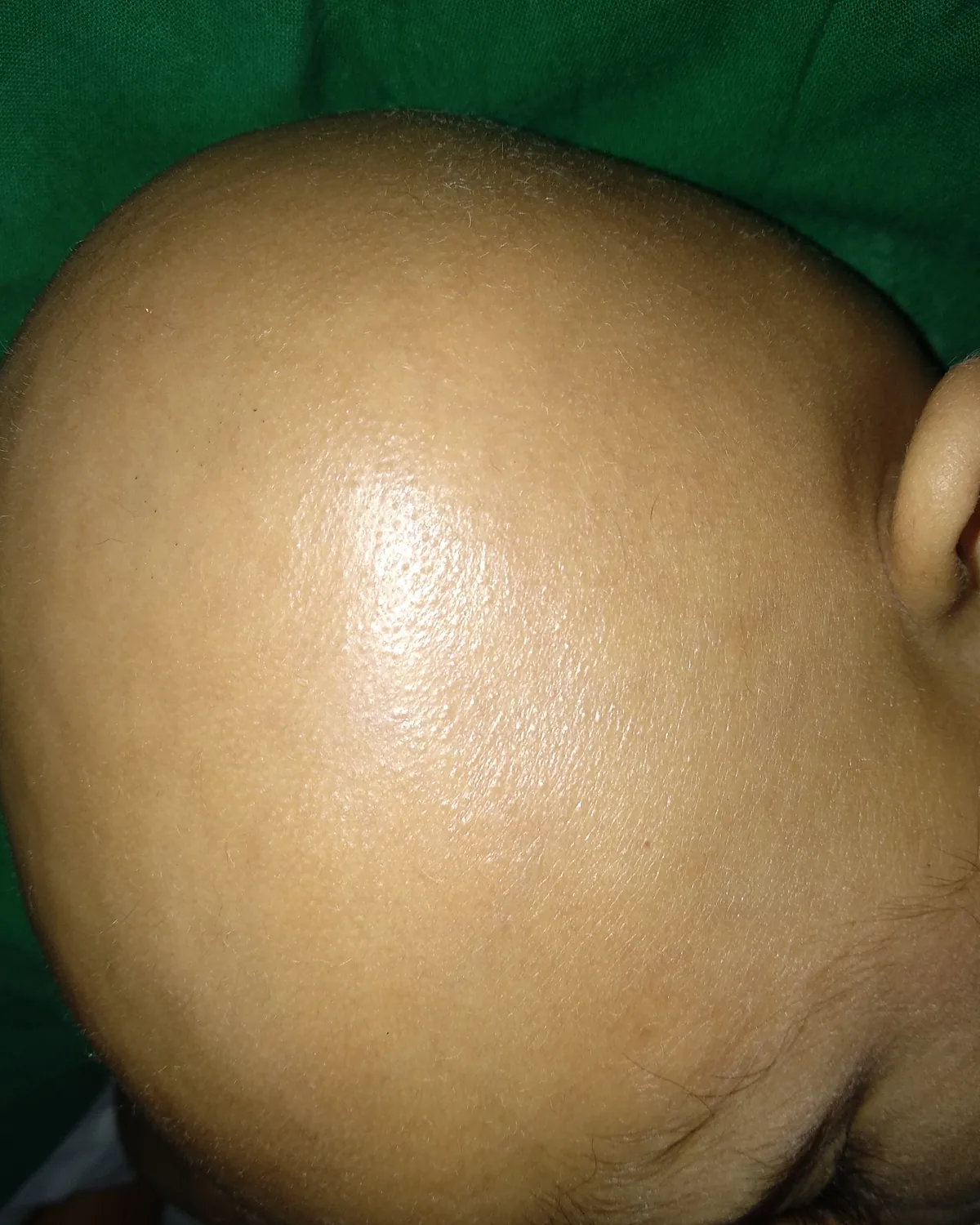
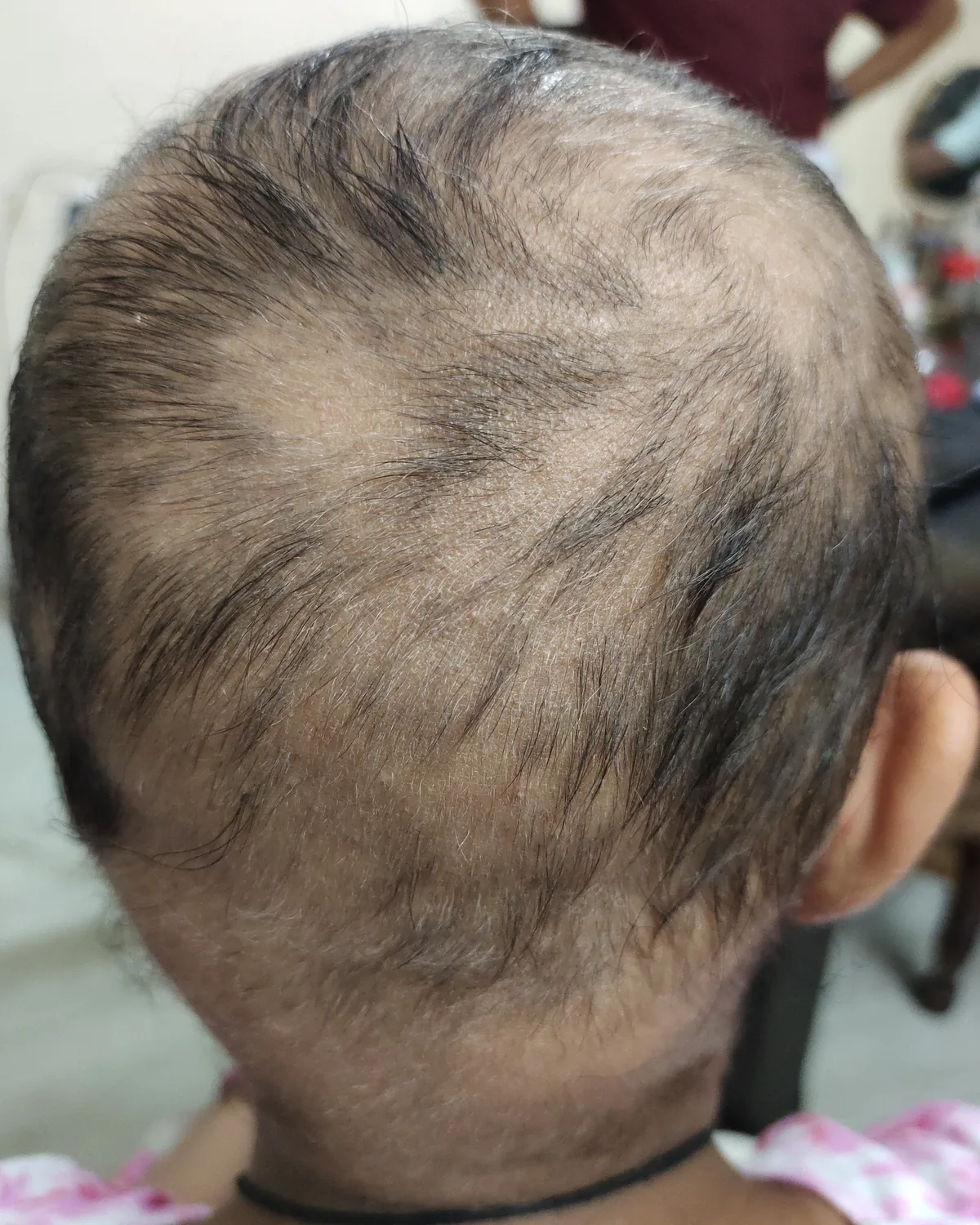
Hair came back over months, not weeks. Early regrowth is fine, pale and patchy long before it thickens, so the first months can look like very little is happening.

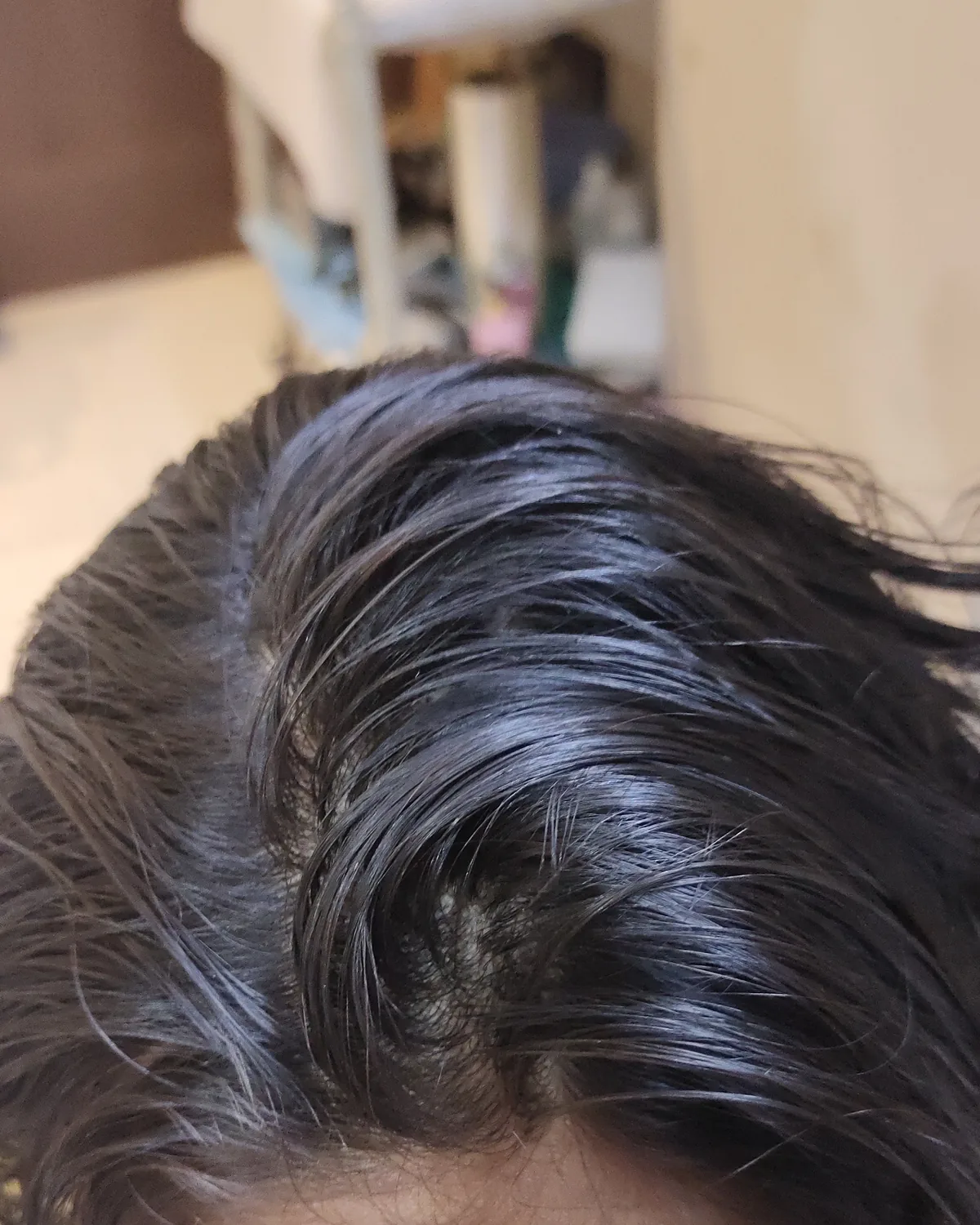
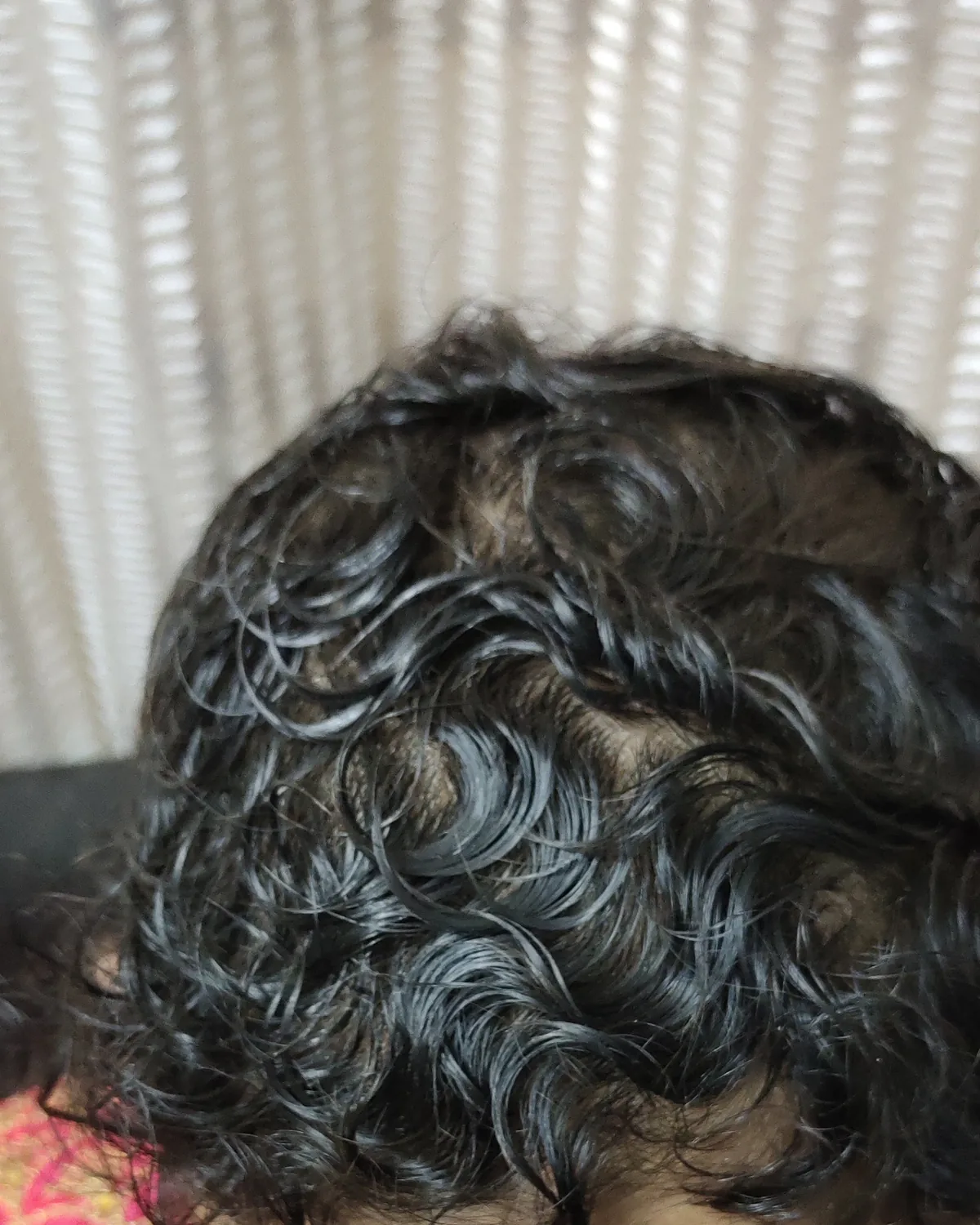
The bare patches filled in from their edges inwards. The parting is the place to compare the two photographs.
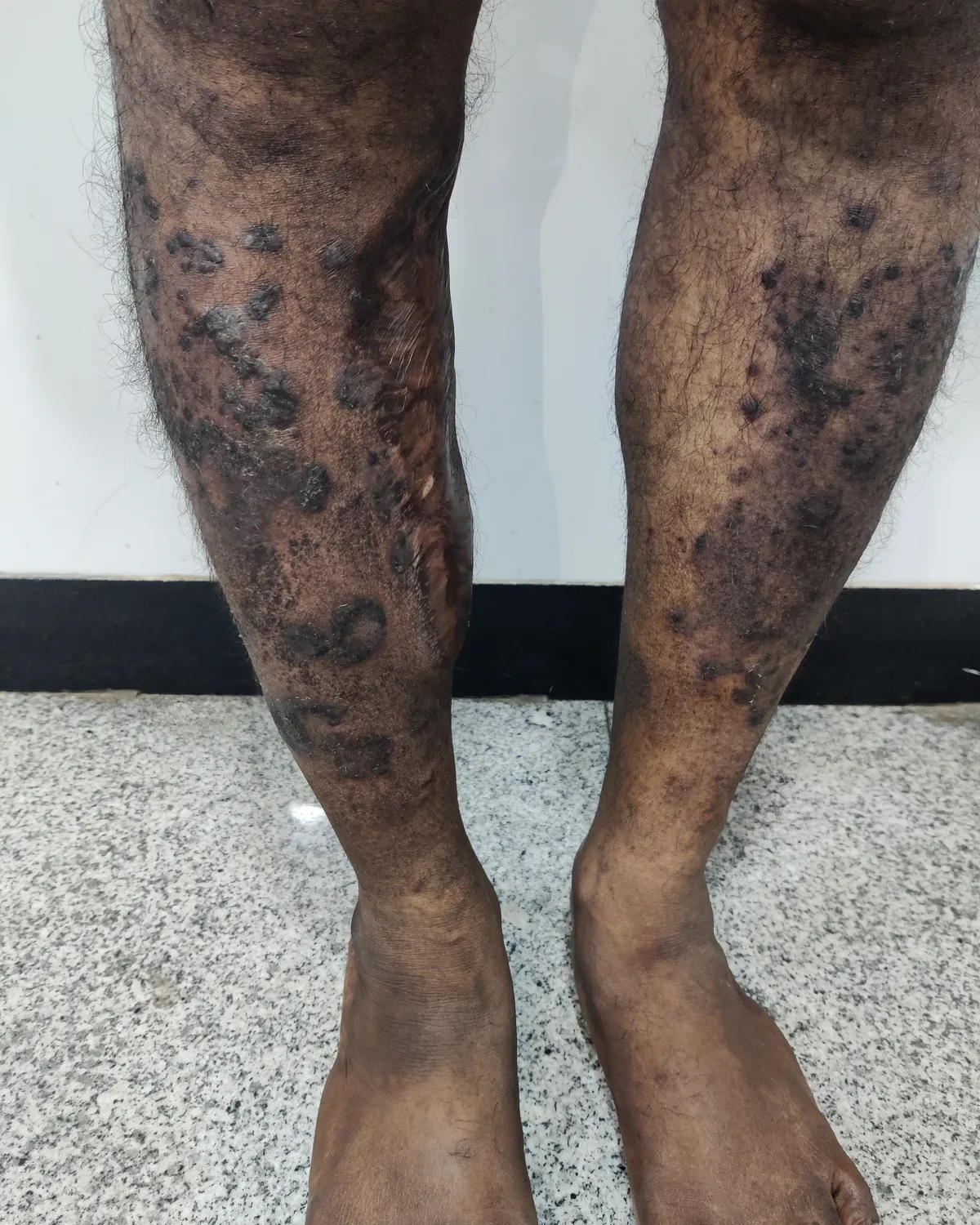

The raised, scaly plaques cleared. The darker marks left behind are not the disease coming back — colour fades more slowly than the plaque does, and it does fade.
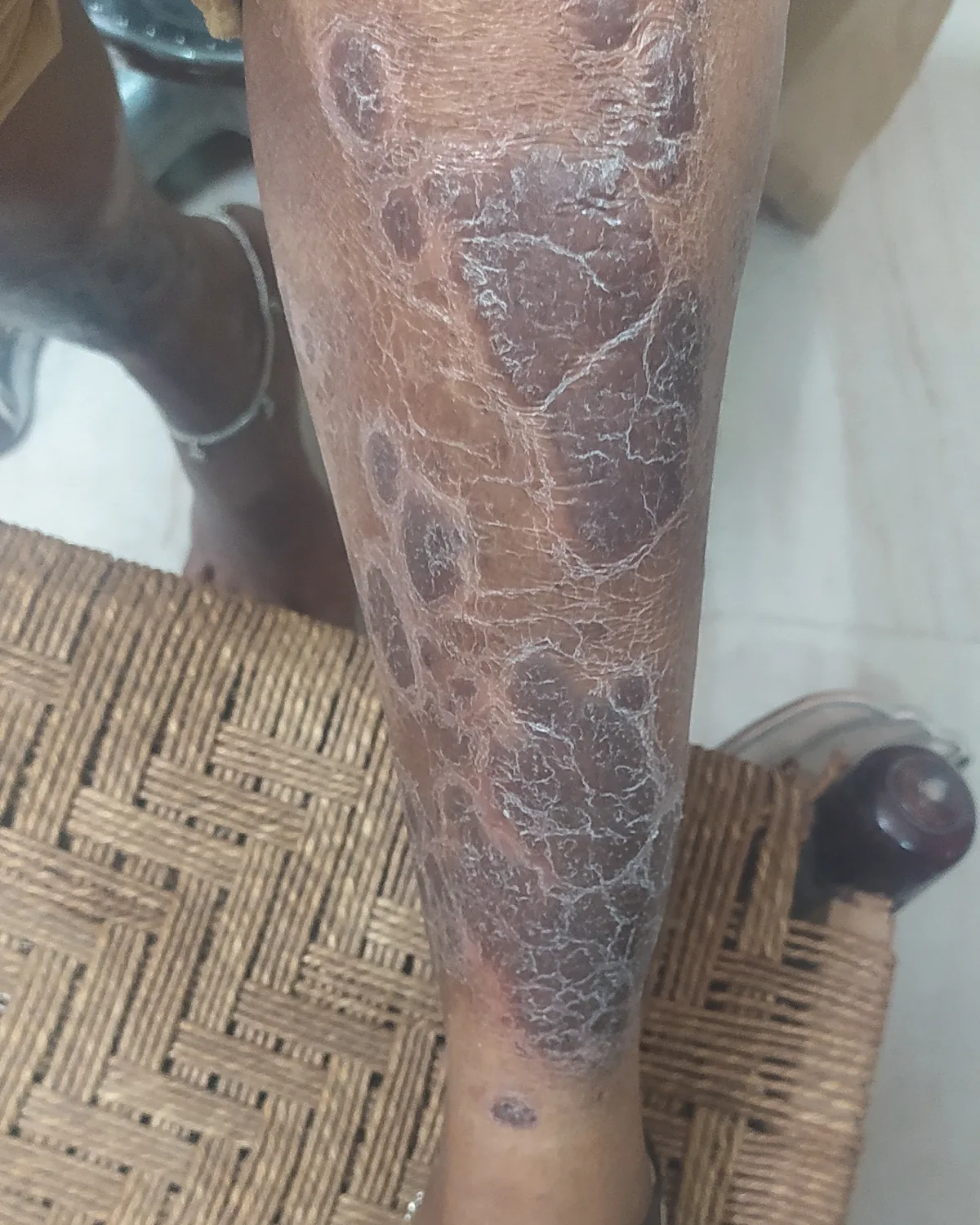
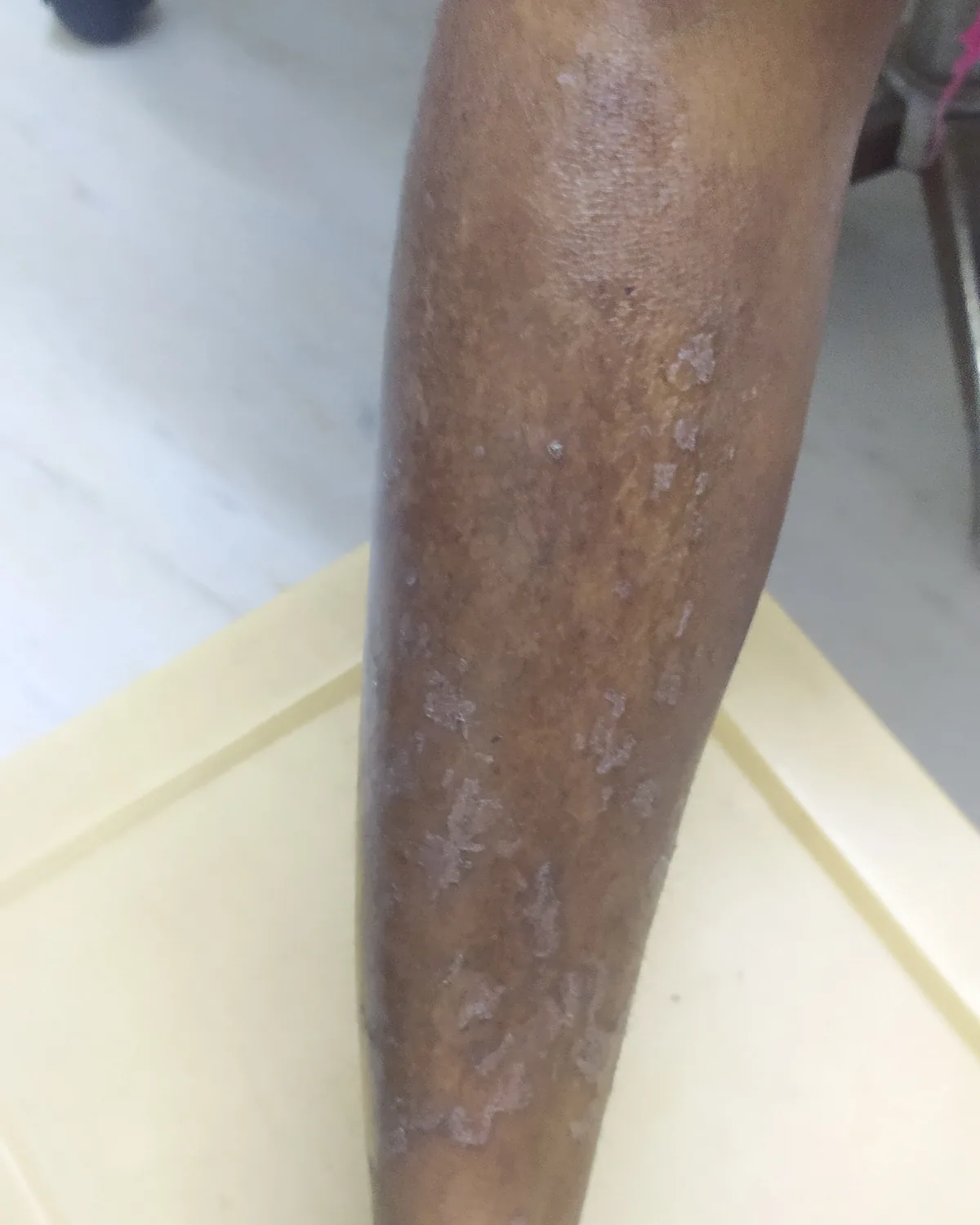
A thick, cracked plaque covering most of one shin. The scale settles first and the colour underneath takes longer to even out.


Vitiligo had already taken almost all of this skin. Rather than chase colour back into the rest, the few patches of natural colour still left were removed so the skin is one even shade. It is a considered choice and not a routine one: it does not reverse, and skin without pigment needs sun protection for life.
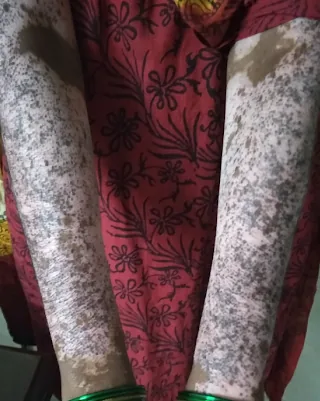
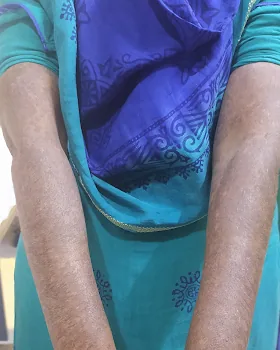
Colour returned across both forearms. Vitiligo this widespread is judged over months rather than weeks, and the same arm can respond well in one place and slowly in another.
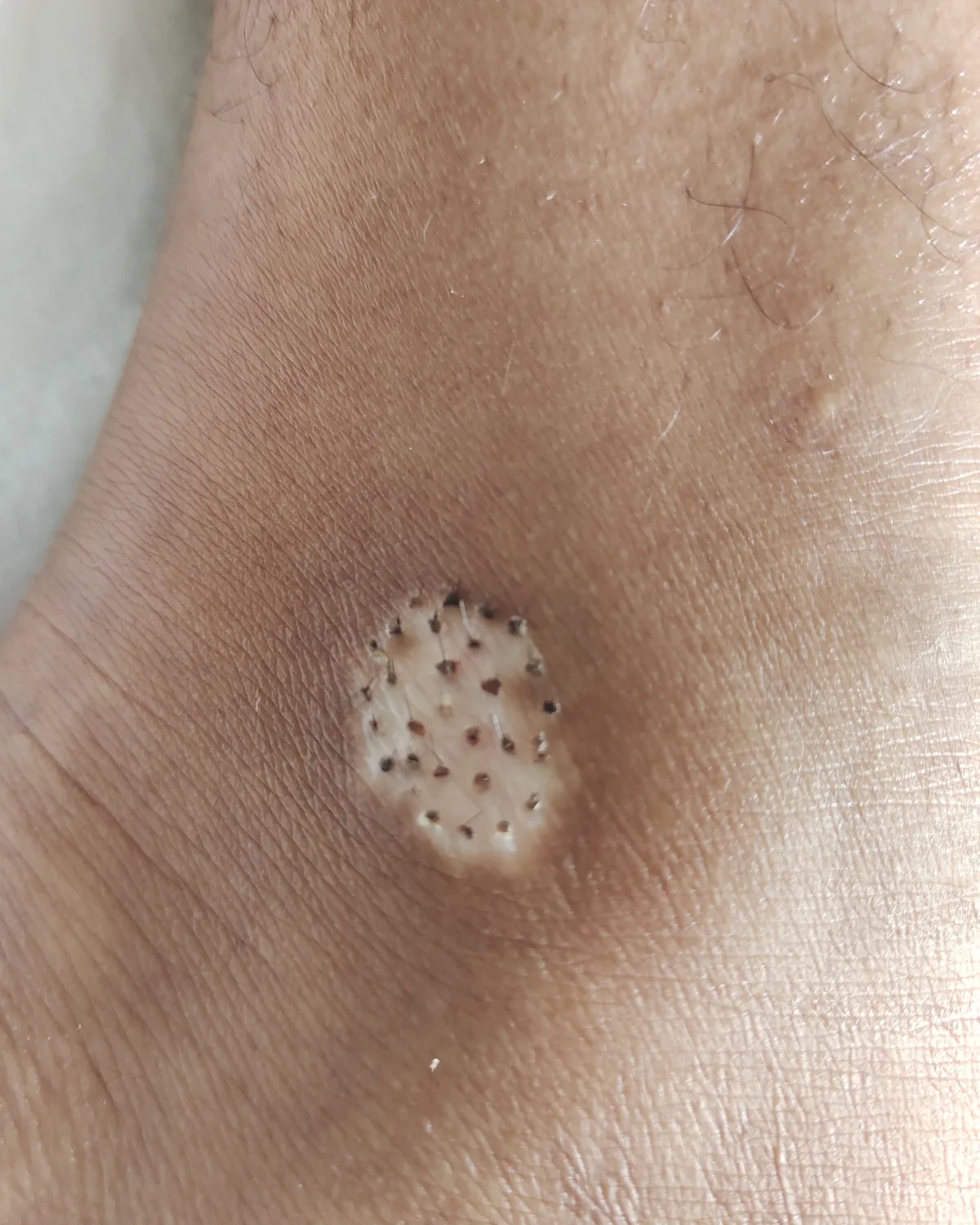
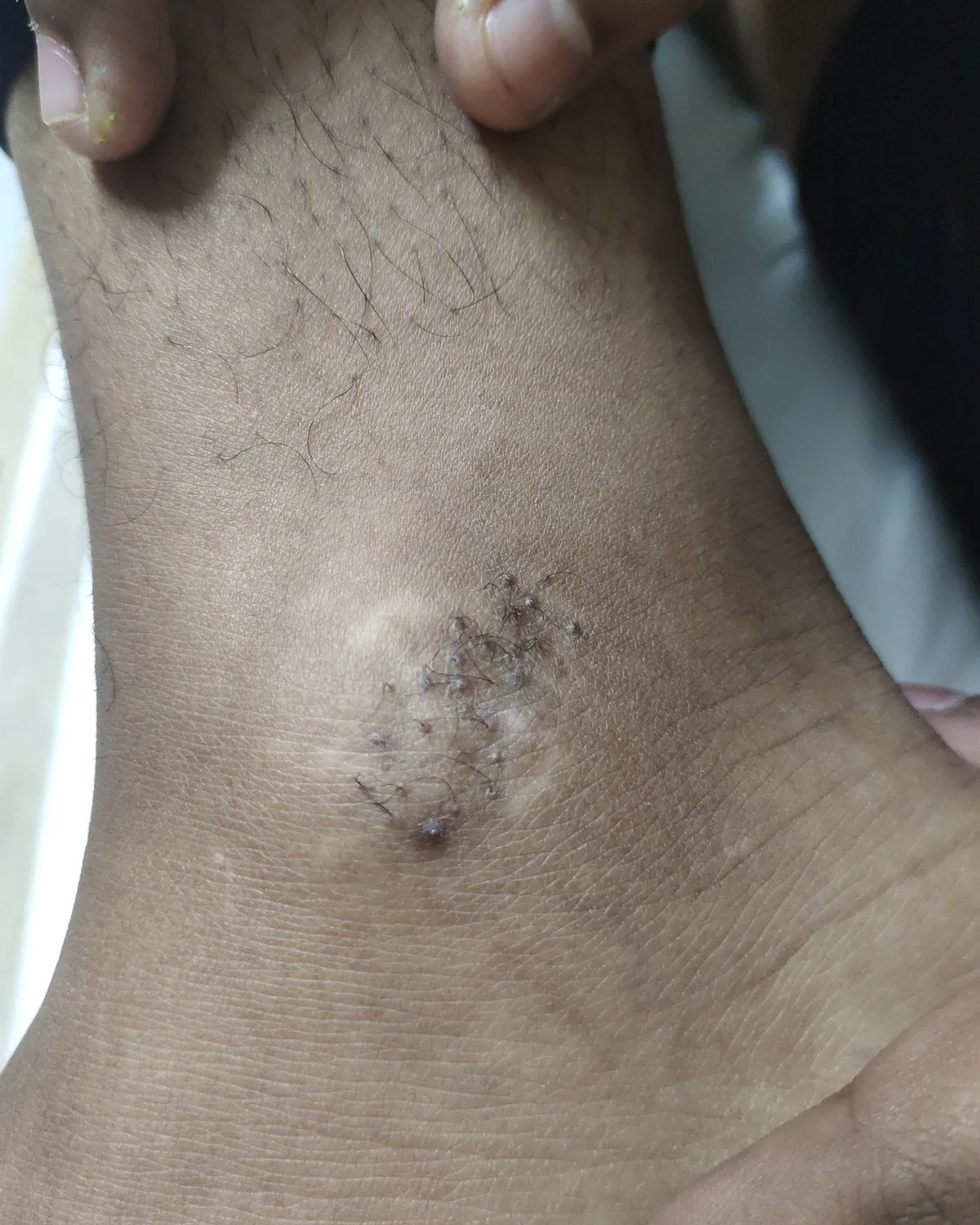
Small grafts are placed into the pale patch, and colour then spreads outwards from each one — which is why the later photograph looks speckled before it evens out. There is no before photograph for this case; the first frame is the procedure.
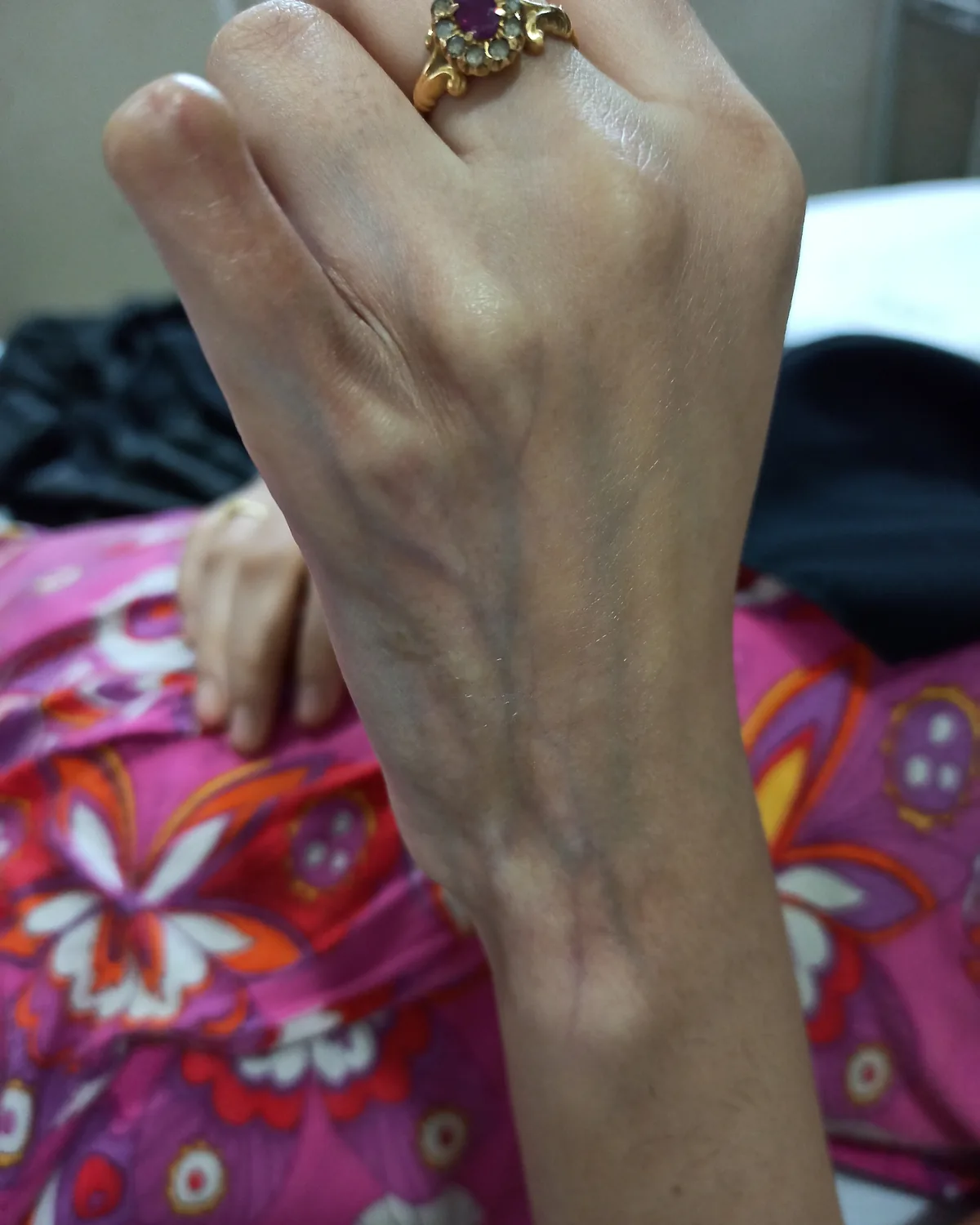
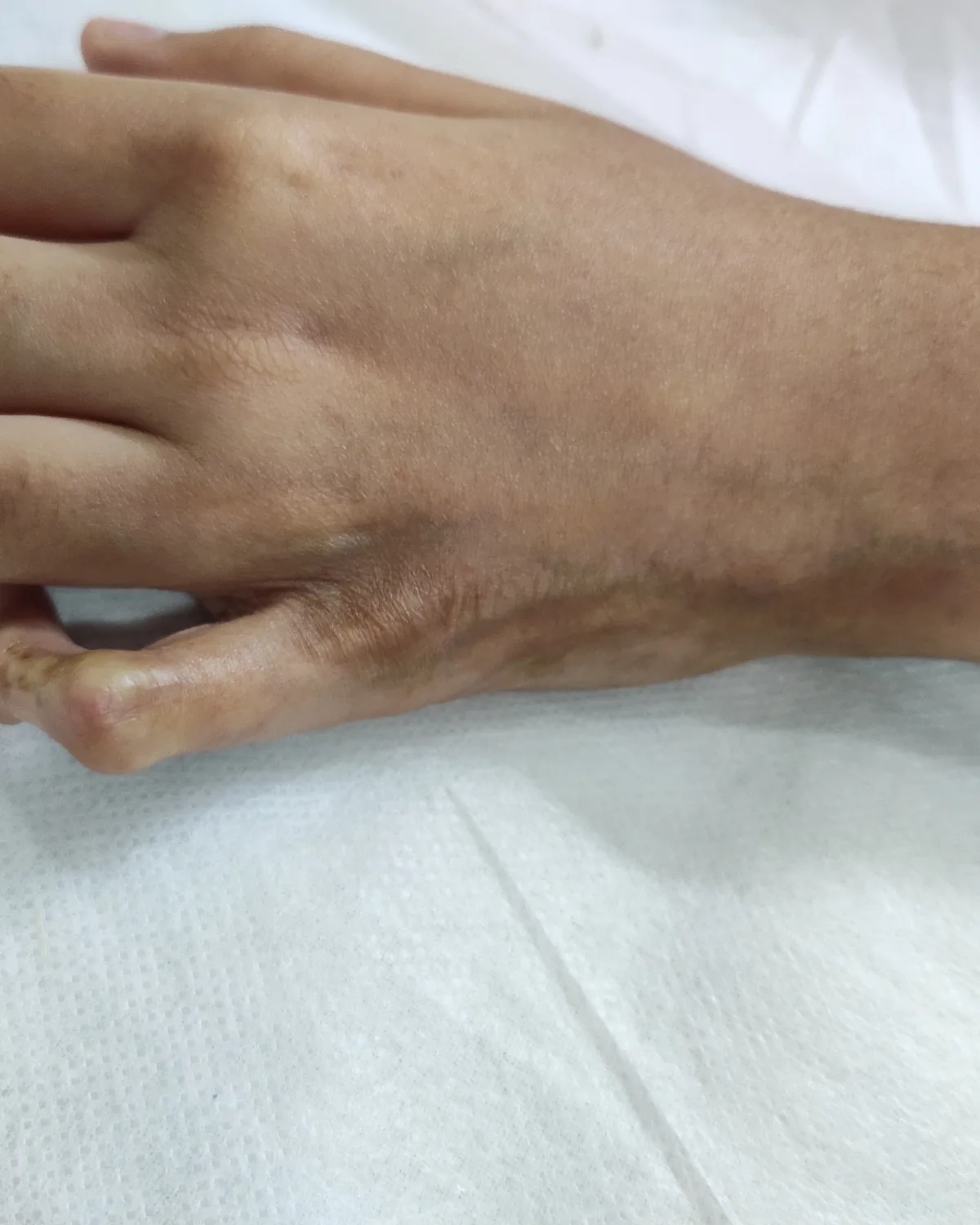
The tight, tethered bands running across the wrist softened, and the skin moved normally again. Morphea is judged by how the skin moves as much as by how it looks.

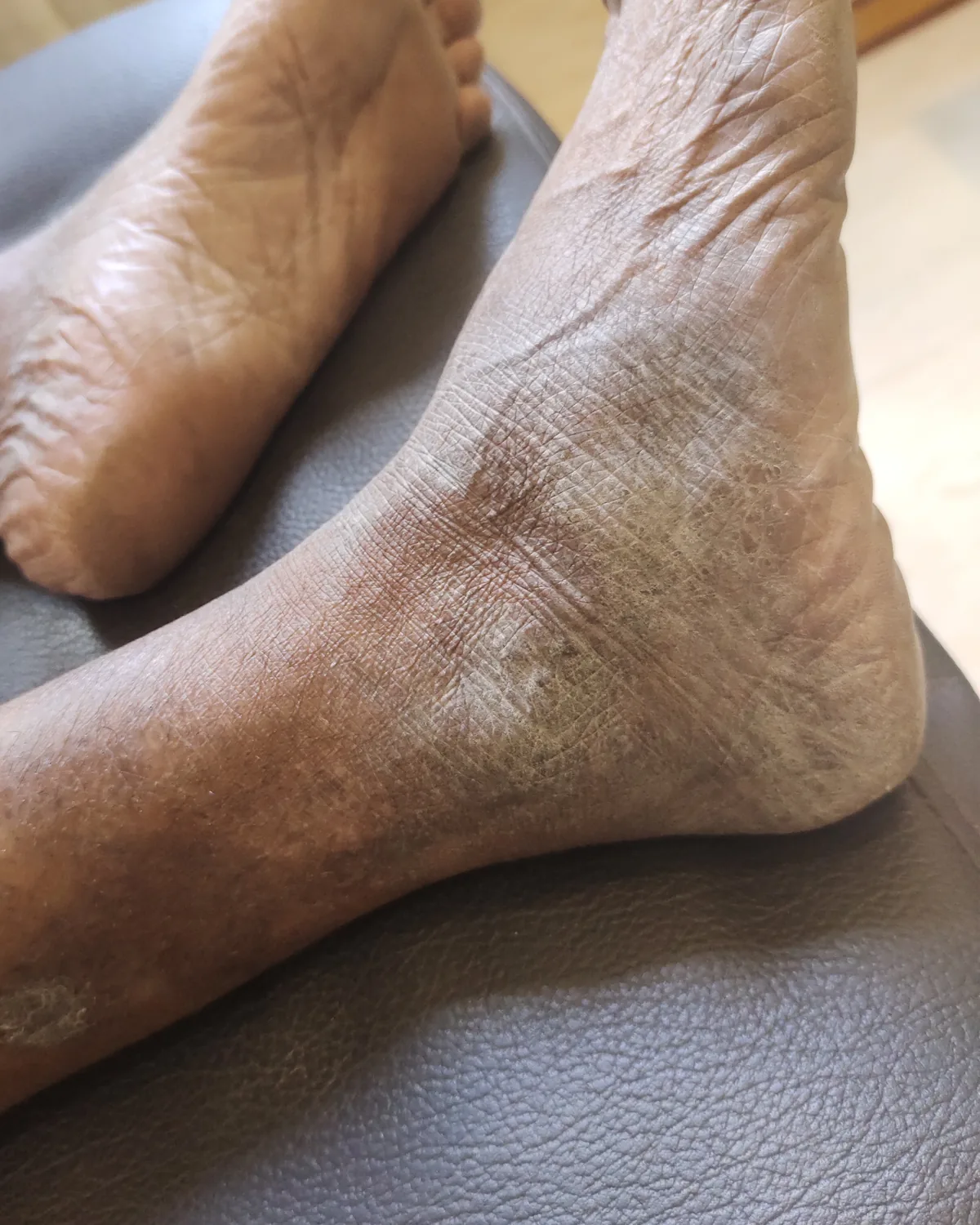
Years of scratching had thickened the skin. The scaling settled; the darker colour it leaves behind fades slowly and is not a flare.
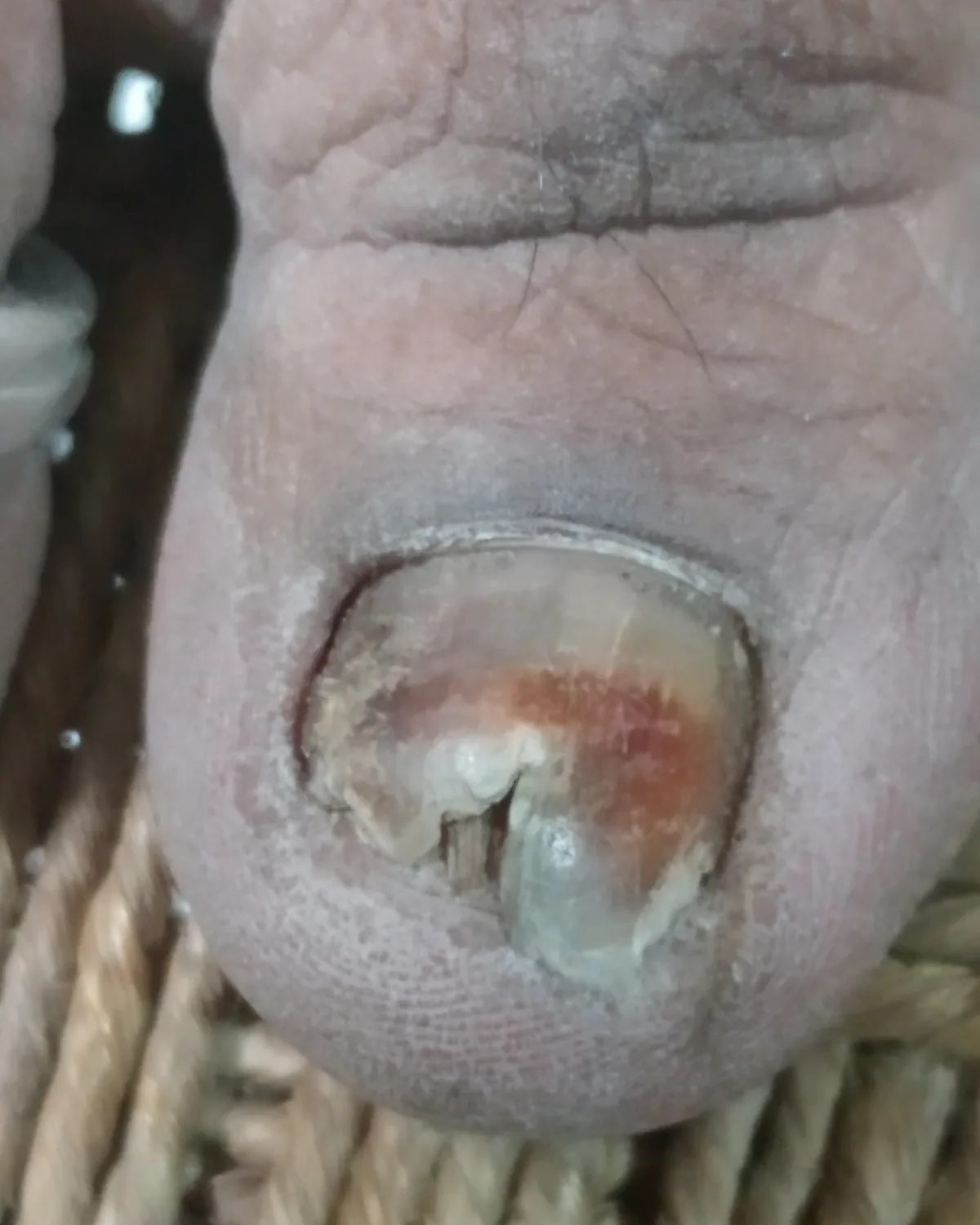

A nail cannot be cleared, only grown out. Treatment stops the infection at the root, and the damaged nail then takes nine to twelve months to reach the tip. Expect that timescale from the start.


The red line is the hairline agreed before anything was placed — the decision the result depends on most. There is no before photograph for this case; the first frame is the planning.
A vitiligo patch does not end where the eye says it ends. Under a Wood’s lamp the affected skin fluoresces and the true border appears, along with patches that ordinary light does not show at all. That is the baseline everything later is compared against.

Which is also why a course judged by photographs alone can look like it is doing nothing while it is working, or the reverse. The lamp is used at the first visit and at reviews.
Illustration, not a photograph.
Repigmentation is scored by the proportion of the patch that has recoloured and where it started from. Perifollicular islands, or inward from the edge.
Measured by how much body surface is involved and how much it is affecting sleep, work and itch. Not by photographs alone.
Lesion counts for acne, pull tests and trichoscopy for hair, and standardised photographs for aesthetic work.
Individual outcomes vary with the condition, its duration, the site, and how consistently treatment is followed. A photograph of one patient’s result is evidence that it happened for them, not a prediction for you.
A standardised photograph taken at the first visit is the only reliable way to answer the question every chronic patient eventually asks: is this actually better, or do I just want it to be?
Memory is a poor instrument over six months. The camera is not. Baseline photographs are taken for the clinical record whether or not they are ever published, and they are only ever published with consent.
Book on WhatsAppSame distance, same light, same angle, so the comparison means something.
Every six to eight weeks for chronic disease. If nothing has moved, the plan changes.
Because only images with a signed publication consent are used. Building that library takes time, and no image is added without it.
Not necessarily. Results vary with the condition, how long it has been present, the body site and how consistently treatment is followed. No result shown here is a prediction of yours.
No retouching, no relighting, no change of angle between the two images. The point of a standardised photograph is that it can be trusted.
Only if you sign a specific written consent for publication. Clinical photographs taken for your record are not publication consent, and you can decline either without affecting your treatment.
Yes, at any time and without giving a reason. The image is removed.
Not a treatment plan sold on the spot. Message the clinic and bring your history.