Where
Plot No 13D/B, Wellington Rd, Vikrampuri Colony, Karkhana, Secunderabad, Telangana 500009.
- Serves Trimulgherry, West Marredpally, Bowenpally, Alwal
- Formerly BNR Skin & Vitiligo Hospital

Pale patches appearing on a child’s face, neck, chest or back in the hot months are most often pityriasis versicolor, an overgrowth of a yeast that lives on everyone’s skin. It is routinely mistaken for vitamin D deficiency, for worms, and for early vitiligo. It is none of those, and it is treatable.
Malassezia lives on normal skin, on everyone, all the time. In heat and humidity, and where there is sweating and oil, it can multiply beyond its usual numbers. Where it does, it interferes with the pigment-producing cells underneath, and the skin there stops tanning at the same rate as the skin around it. That is the pale patch.
This explains the pattern families describe. It appears as the weather turns, it is more obvious after sun because the surrounding skin darkens while the patch does not, and it fades in winter. It is not caught from anyone and it is not a sign of being unwashed — the organism is already there on clean skin.
The same yeast, in a different pattern, causes dandruff and seborrhoeic dermatitis. One organism, three presentations, which is why the same person often has more than one of them.

Dr. (Lt Col) Khagendra Varada
Reg. No. 10461, Hyderabad State Medical Council
Full background →“I was pleasantly surprised when my melasma cleared with four sessions of strong salicylic Acid peels. I believe BNR skin formulates salicylic acid and TCA Peels in house… Therefore they are very effective, only downside is that they sting a lot.”
“Doctor has very good experience and excellent treatment of fungal inspection”
The yeast is not spread evenly across the surface of the skin. It sits down inside the follicle, in the oil it feeds on, and a cream wiped over the top of the skin does not reach that far. That is the reason the preparation used here is a lotion thin enough to run down the shaft rather than an ointment that rests on it.
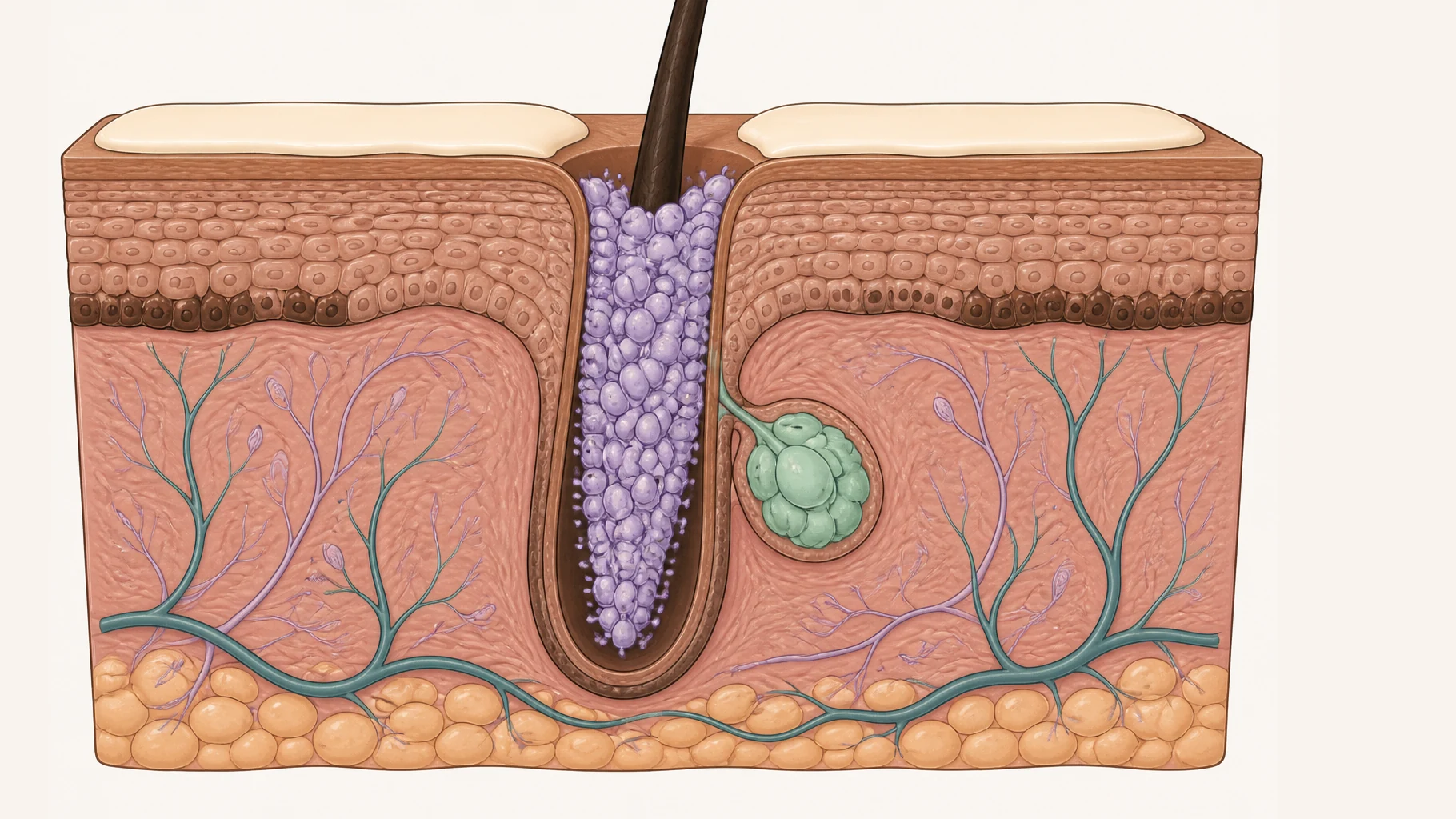
It also explains the relapse. Treat only the surface and the surface does clear — then the colony still in the follicle repopulates it.
Illustration, not a photograph.
| Mistaken for | Why | How it differs |
|---|---|---|
| Vitamin D deficiency | Pale patches are widely believed to mean a deficiency | No deficiency produces discrete patches like this; blood levels do not change them |
| Intestinal worms | A common family belief about pale marks in children | Deworming has no effect on it; the patches are a skin surface infection |
| Vitiligo | Both are pale patches | Vitiligo patches are chalk-white with no scale and a sharp border; these are off-white, finely scaly, seasonal |
| Pityriasis alba | Also pale, also common on children’s faces | Follows eczema-prone dry skin rather than heat; different treatment |
| Leprosy | A fear that brings many families in | A patch with genuinely reduced sensation is a different matter and is examined for specifically |
Where the picture is not clear it is examined rather than guessed at. Distinguishing this from early vitiligo matters, because the two go in opposite directions if left alone.
Scale, distribution and appearance under examination usually settle it. Treating a pale patch as fungal when it is early vitiligo loses time that matters.
The yeast sits in the opening of the hair follicle, below the surface. A lotion is prepared here to carry the antifungal down into the follicle rather than sit on top of it — which is why an ordinary surface cream so often fails.
The visible patches are where pigment has been affected. The yeast is spread more widely than that. Treating only what you can see is the commonest reason it comes straight back.
The infection clears well before the skin matches again. This is the part nobody is told, and it is why families think treatment failed.
Killing the organism does not restore the colour. The pigment cells have to resume normal production and the skin has to even out, and that takes weeks to a few months, usually faster once there is some sun exposure again.
So a patch that is still visible at four weeks is not evidence that treatment failed. It is the expected course. Families who are not told this stop treatment early, or start a second course that was not needed, and some conclude the child has vitiligo after all.
If the patches are chalk-white insteadScale gone, no new patches, edges no longer spreading. This happens first.
Weeks to a few months later. Judged separately from whether the infection cleared.
The infection is over well before the skin looks even. Once the scale has gone the yeast has usually been dealt with, and the pale patch left behind is pigment that has not been made again yet. It fills in slowly, and from the edges inward.
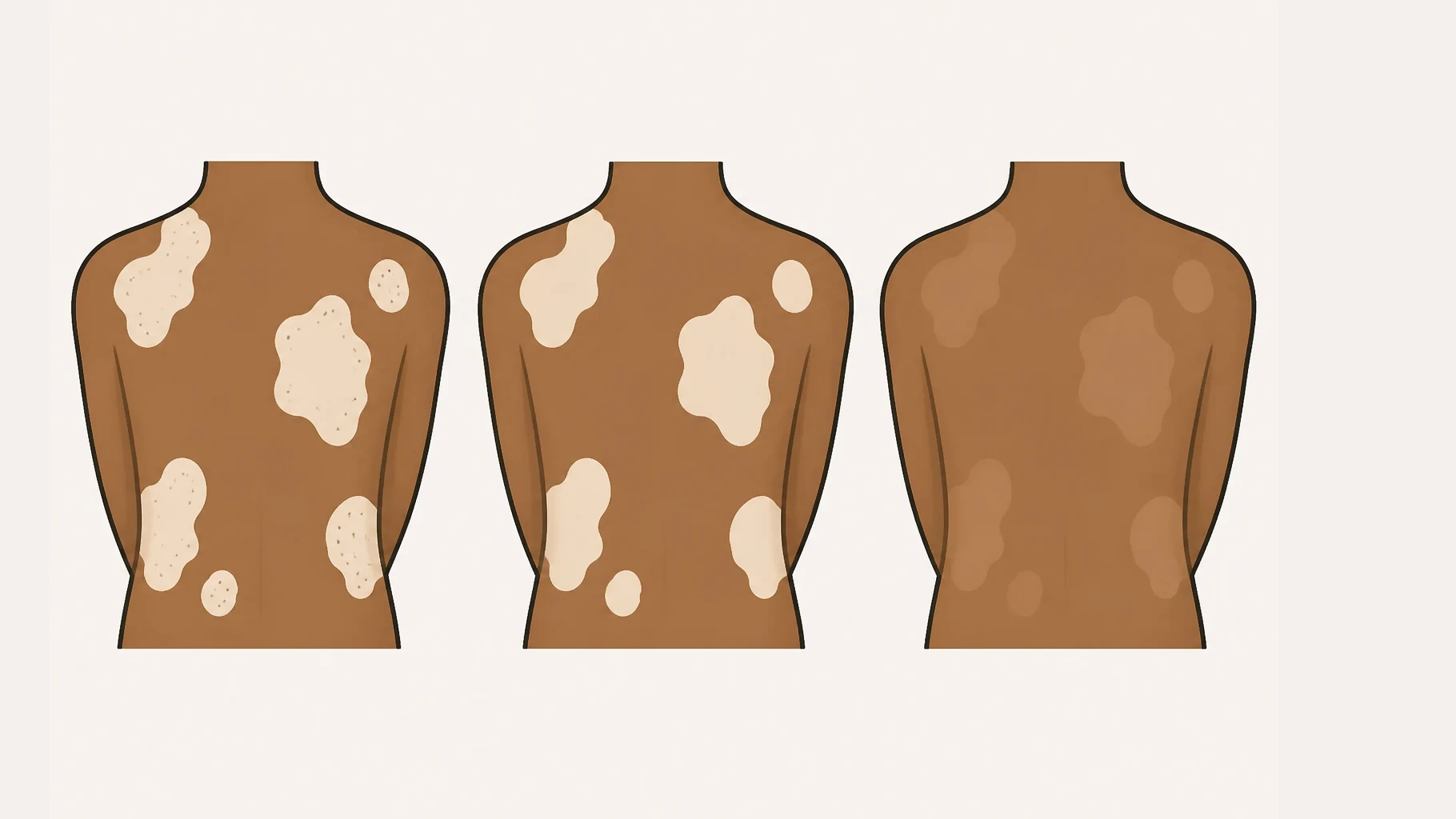
This is the point at which treatment gets abandoned as a failure. The patches in the middle panel no longer carry the yeast — the colour simply has not caught up with them.
Illustration, not a photograph.
The organism is a normal resident of skin, so treatment reduces it rather than eliminating it for good. In a hot, humid climate recurrence is common and is not a sign that anything went wrong. For people who get it every year, a short preventive course before the season is more effective than treating each episode after it appears.
Examined, and the preparation mixed, at one address in Secunderabad. The practice was formerly known as BNR Skin & Vitiligo Hospital.
Plot No 13D/B, Wellington Rd, Vikrampuri Colony, Karkhana, Secunderabad, Telangana 500009.
On WhatsApp: one number, answered by the clinic team, who confirm a time and say what to bring.
Low vitamin D is common and worth correcting on its own merits, but it does not cause patches like these. The two often coexist simply because both are common, and correcting the vitamin does not clear the patches.
No. The yeast already lives on everyone’s skin, including yours. It is an overgrowth of what is normally there, not something passed from person to person.
It is examined for exactly that. Vitiligo patches are chalk-white with a sharp edge and no scale, and they do not follow the seasons. Where there is any doubt it is looked at properly rather than treated on assumption.
Usually one of two reasons: the yeast sits inside the hair follicle where a surface cream does not reach, or only the visible patches were treated while the organism was spread more widely across the area.
The infection clears in weeks. The colour usually evens out over one to three months after that, and faster with some sun. Those are two separate things and are judged separately.
The clinical statements on this page follow the guidance and evidence below. They are independent sources. None of them is connected to this clinic, and none of them sells the treatments described here.
Not a treatment plan sold on the spot. Message the clinic and bring your history.