
Steroids hidden in herbal creams
Some creams sold in India as herbal, Ayurvedic or natural, for vitiligo, psoriasis, eczema and fairness, contain corticosteroids that are not on the label. That is why they work fast, and why the skin thins, reddens and flares when they stop. This page is how to tell, what the damage looks like, and how to come off one without a rebound.
At a glance
- Documented
- Steroids found in surveyed alternative-medicine preparations
- The tell
- Fast clearing; rebound within days of stopping
- Damage
- Thinning, red face, stretch marks, acne, spreading fungus
- How it is checked
- The label first; a dermatoscope shows thinning; a lab can confirm
- Stopping
- Tapered, not abrupt, if it has been used for weeks on the face
- Keep
- The pack, the receipt, and the name of who dispensed it
A steroid is the fastest way to make any cream look like it works.
A potent corticosteroid clears a psoriasis plaque, calms eczema, fades a patch of inflammation and lightens skin within days. Put one into a cream and leave it off the label, and the cream acquires a reputation. The pattern is old enough to have been surveyed: a 2001 study of preparations dispensed by practitioners of alternative systems in India found corticosteroids in more than a third of the samples tested, and a 2010 laboratory survey of Ayurvedic and herbal products found dexamethasone in several, every one of them dispensed by a practitioner rather than sold by a manufacturer.
That last detail matters, and it is the reason this page names no system. Manufactured, labelled products from any system were clean in that survey. The adulterated ones were loose preparations handed over without a label, which is the thing to watch for, whoever hands it over.
India also has the world’s largest documented problem with topical steroids sold openly and misused, on faces, for fairness, for fungal infections and for anything that itches. The hidden version is the same drug with the warning removed.
Who is treating you, and what his patients said.

Dr. (Lt Col) Khagendra Varada
- 45 years in dermatology and dermatosurgery
- 25 of them in the Indian Army Medical Corps
- MBBS, Osmania Medical College
- Dip. Practical Dermatology, Cardiff · Dip. Dermatology, AAAM
Reg. No. 10461, Hyderabad State Medical Council
Full background →“I have been going pillar to post to get my son cured of his white spot on his left side of lip and chin. It appeared 8 years back. I was told it’s special type of nerve vitiligo which has no cure. After reporting to him he told us that it is SEGMENTAL VITILIGO and unlikely and difficult to be cleared by medications alone. He suggested for surgical melanocyte transplant… I was amazed after around one month that he started rapidly getting pigmentation. I wholeheartedly suggest please do not waste time like I did.”
“Dr. Varada is an incredibly patient, knowledgeable and wonderful doctor. He sorted out an issue that I had been dealing with for years in one appointment and there’s been no looking back since!”
A steroid thins the skin that did not need it.
A potent corticosteroid switches off inflammation, which is why it clears a plaque or a rash within days. Applied for weeks to skin that is not inflamed, or to thin skin on the face and folds, it also switches off the cells that maintain the dermis: collagen is lost, blood vessels show through, and the barrier weakens.
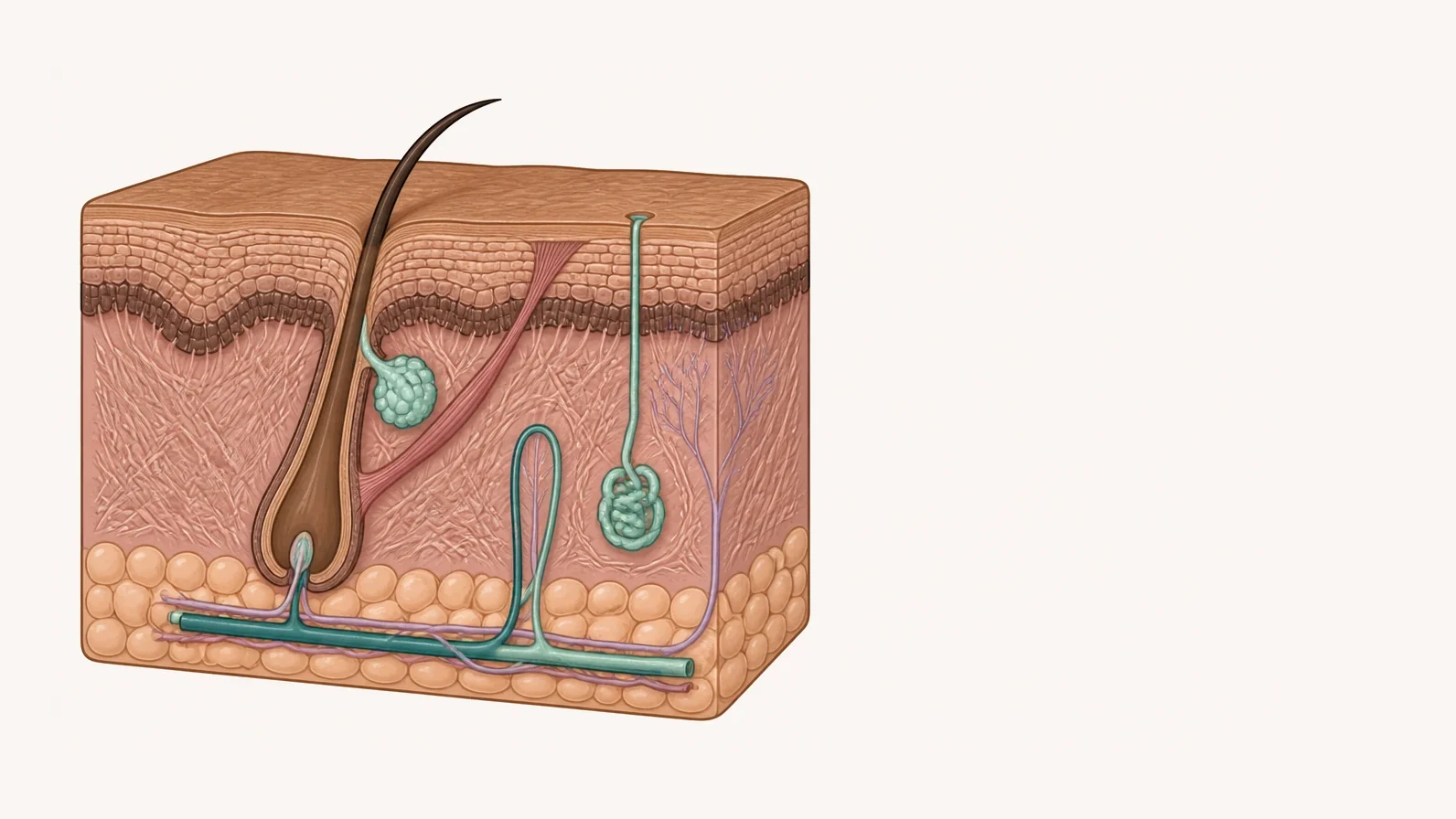
- 1Epidermis — the barrier
- 2Dermis
- 3Hair follicle and oil gland
- 4Fat
Thinning is the change that does not fully reverse. Redness, acne and fungal spread settle once the steroid stops; lost dermal thickness and stretch marks largely do not. That is the cost of a cream whose label did not say what was in it.
- Epidermis — the barrier
- Dermis
- Hair follicle and oil gland
- Fat
Illustration, not a photograph.
How to tell a hidden steroid
| Sign | What you notice | What it means |
|---|---|---|
| Speed | A rash or plaque clears within days | Almost nothing herbal works that fast |
| Rebound | It flares, often worse, within days of stopping | The classic steroid withdrawal pattern |
| Redness that stays | A red, burning face that no longer settles | Steroid-dependent skin; the vessels are dilated |
| Thinning | Skin looks shiny, veins show through, bruises easily | Dermal loss; this is the part that does not fully reverse |
| Stretch marks | Purple lines in folds, thighs, armpits | Steroid striae, permanent |
| Acne and hair | New pimples; fine hair where there was none | Steroid acne and hypertrichosis |
| Fungal spread | A ring-shaped rash that keeps growing while the itch is calmer | The steroid has fed the fungus while hiding it |
| Lightening | Skin lighter than the surrounding area after use | Steroid-induced hypopigmentation, often mistaken for the cream ‘working’ |
Two or more of these together in a cream with no named ingredient is enough to stop and ask. A dermatoscope shows the thinning and the vessels; a laboratory can identify the steroid if it matters for a complaint.
Five checks for any cream without a full label.
- Ask for the ingredients by name. A refusal is an answer
- Look for a licence number on the pack; loose preparations in unmarked jars have none
- Keep the pack and the receipt; they are the evidence if the skin reacts
- Never use an unlabelled cream on the face, the folds, or a child: those are where steroids do the most harm
- If it works within days, stop and ask why; that speed has a cause
Stopping is a plan, not a decision.
Skin that has had a potent steroid for weeks or months, especially on the face, does not tolerate abrupt withdrawal: it flares, reddens and burns for days to weeks, and many people go back to the cream to make it stop, which is how the cycle holds. The way out is a taper, usually onto a milder steroid or a non-steroid anti-inflammatory such as tacrolimus, with the underlying condition treated properly at the same time.
Bring the cream to the consultation. Knowing what was in it, for how long, and where, is what decides the taper. Nobody here needs to be told the story with apologies; the pattern is common enough to have a protocol.
Arrange a consultationWhat reverses
Redness, acne, hair and fungal spread settle over weeks once the steroid is out and the fungus is treated.
What does not
Lost dermal thickness and stretch marks are largely permanent. That is the cost, and it is why the label matters.
The steroid is not the villain. The missing label is.
Potent topical steroids are legitimate, effective drugs in both vitiligo and psoriasis, and this clinic prescribes them: in cycles, on the body, with a stopping date and a review. What makes the same molecule dangerous in a herbal cream is that nobody knows the strength, nobody set a duration, and the face and the folds get it for months.
So the question to ask about any cream that works on a plaque or a patch is not whether it contains a steroid. It is whether whoever gave it to you will say so, and will say for how long.
Face, folds and children
These are the three places a hidden steroid does lasting harm fastest. A ‘herbal’ cream for a child’s white patch, a woman’s melasma or a man’s groin rash that clears in days deserves suspicion in proportion to how well it worked.
Hidden steroids
How do I know if my herbal cream has steroids in it?
By what it does: clears fast, flares on stopping, and over weeks thins, reddens or lightens the skin. By what it lacks: a named ingredient list and a licence number. A dermatologist can see thinning and dilated vessels under a dermatoscope; a laboratory can identify the steroid if you need proof.
Is there a test for steroids in a cream?
Yes. Laboratories identify corticosteroids by chromatography, which is how the published surveys found them. In clinic the signs on your skin are usually enough to act on; testing is for when you want to make a complaint.
What happens if I stop suddenly?
If the cream has been used for weeks on the face or folds, a rebound flare is likely: redness, burning and a return of whatever it was suppressing, often worse. That is why stopping is tapered and the underlying condition is treated at the same time.
Can steroid damage be reversed?
Partly. Redness, acne, fine hair and fungal spread settle once the steroid is gone. Thinning of the dermis and stretch marks are largely permanent, which is why the first weeks matter more than the last.
Are all Ayurvedic or herbal creams adulterated?
No. The surveys found adulteration in loose preparations dispensed by some practitioners, across systems, and not in manufactured, labelled products. The warning sign is the missing label, not the tradition on it.
Where can I report an adulterated cream?
To the state drugs control administration, with the pack, the receipt and the name of who dispensed it. A dermatologist’s note describing the skin changes helps. Keep everything until the complaint is closed.
The clinical statements on this page follow the guidance and evidence below. They are independent sources. None of them is connected to this clinic, and none of them sells the treatments described here.
- Topical corticosteroid misuse: the Indian scenarioIndian Journal of Dermatology, via PubMed Central (2014)
- Detection and characterization of synthetic steroidal and non-steroidal anti-inflammatory drugs in Indian ayurvedic/herbal products using LC-MS/TOFPubMed (2010)
- Misuse of corticosteroids in some of the drugs dispensed as preparations from alternative systems of medicine in IndiaPubMed (2001)
- Topical corticosteroids: patient information leafletBritish Association of Dermatologists
- Topical steroidDermNet (New Zealand Dermatological Society)
Related on this site
The first appointment is a diagnosis.
Not a treatment plan sold on the spot. Message the clinic and bring your history.