
Bakuchi oil for vitiligo: the herb behind PUVA
Bakuchi, or babchi, is the seed of Psoralea corylifolia, and it works on vitiligo because it contains psoralen, the molecule dermatologists dosed for decades in PUVA. That makes it both the traditional remedy with the most real mechanism behind it and the most dangerous one to use without a dose, because sunlight is the other half of the drug.
At a glance
- The plant
- Psoralea corylifolia: bakuchi, babchi, bavachi
- The actives
- Psoralen and isopsoralen; also bakuchiol
- Works by
- Sensitising skin to ultraviolet A: the PUVA principle
- Risks
- Phototoxic burns, blisters, dark marks; liver injury with oral use
- Supervised version
- Narrowband UVB, or PUVA with a metered dose
- Verdict
- Active, unmetered. Ask before using it.
A photosensitiser, and then the sun.
Psoralens are small molecules that slip between the strands of DNA in skin cells. On their own they do nothing. Under ultraviolet A they bind, and the resulting reaction does two useful things in a vitiligo patch: it damps the immune cells attacking the pigment cells, and it stimulates the pigment cells surviving in hair follicles to divide and migrate outward.
That is the entire mechanism of PUVA, the treatment that dominated vitiligo care from the 1950s to the 1990s, and it is the mechanism of bakuchi paste on a patch followed by an hour in the courtyard. The difference is not the molecule. It is that one is weighed and the other is not, and that one light source is metered and the other is the weather.
The same reaction, past a threshold, is a burn. Psoralen burns arrive hours after the exposure, blister, and heal with dark marks that can outlast the vitiligo they were meant to treat. Reports of severe blistering in children treated with the seeds are in the literature for exactly this reason.
Who is treating you, and what his patients said.

Dr. (Lt Col) Khagendra Varada
- 45 years in dermatology and dermatosurgery
- 25 of them in the Indian Army Medical Corps
- MBBS, Osmania Medical College
- Dip. Practical Dermatology, Cardiff · Dip. Dermatology, AAAM
Reg. No. 10461, Hyderabad State Medical Council
Full background →“I have been going pillar to post to get my son cured of his white spot on his left side of lip and chin. It appeared 8 years back. I was told it’s special type of nerve vitiligo which has no cure. After reporting to him he told us that it is SEGMENTAL VITILIGO and unlikely and difficult to be cleared by medications alone. He suggested for surgical melanocyte transplant… I was amazed after around one month that he started rapidly getting pigmentation. I wholeheartedly suggest please do not waste time like I did.”
“Dark spots are seen in one month… Even before perticular treatment for vitiligo, great”
Metered light is the whole difference.
Psoralen does nothing on its own. It makes skin exquisitely sensitive to ultraviolet A, and the treatment is the light that follows. In a phototherapy unit that light is measured to the joule and increased by steps; in a courtyard it is whatever the sun delivers that day.
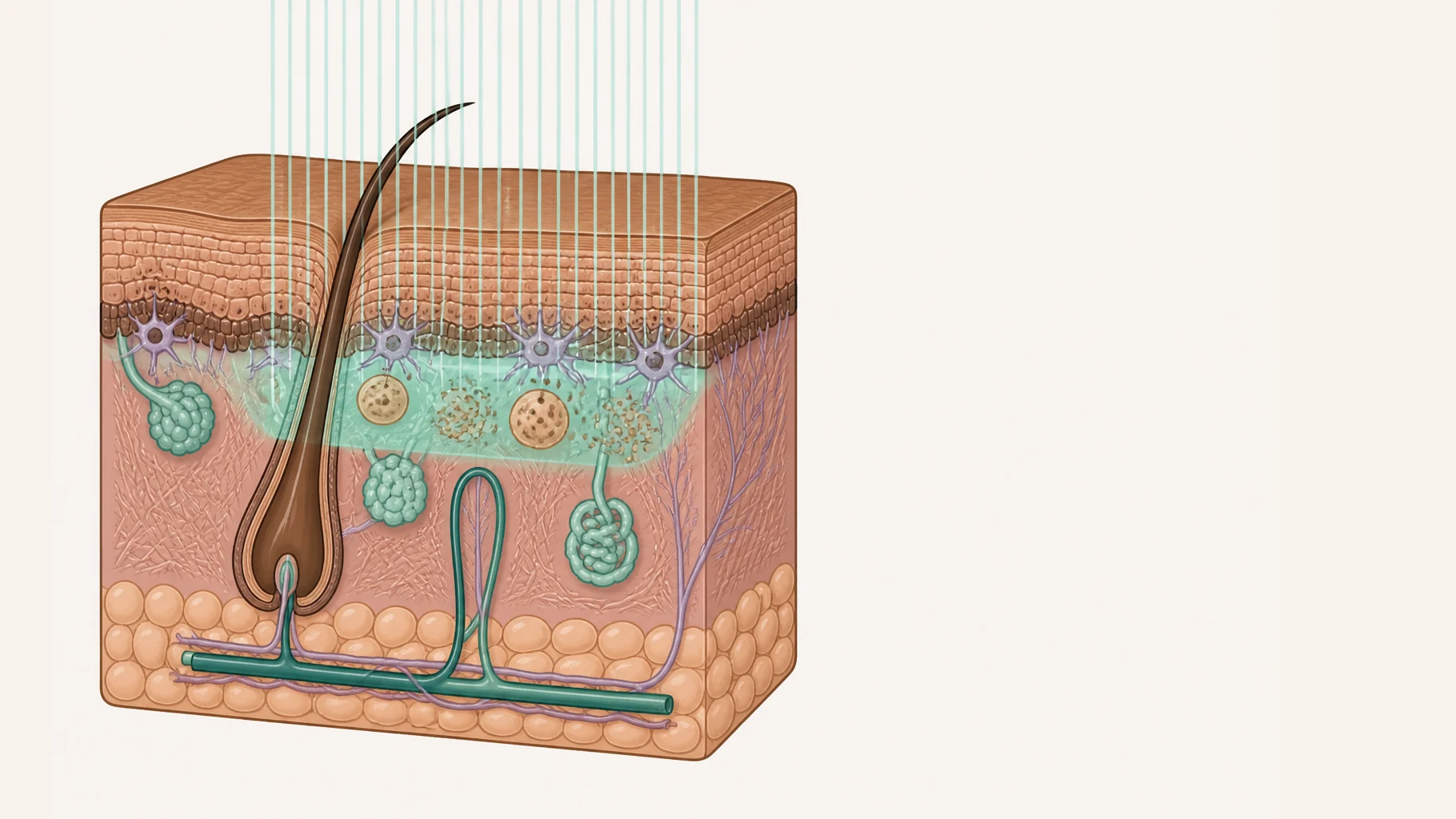
- 1Ultraviolet enters here
- 2Pigment cells reactivated
- 3Immune cells suppressed, and no deeper
The same molecule, applied with the same intent, is a treatment in one setting and a burn in the other. Dermatology did not abandon psoralen because it fails; it abandoned unmetered psoralen, and then largely replaced PUVA itself with narrowband UVB, which needs no sensitiser at all.
- Ultraviolet enters here
- Pigment cells reactivated
- Immune cells suppressed, and no deeper
Illustration, not a photograph.
Bakuchi and sun, or phototherapy?
| Bakuchi with sunlight | Supervised phototherapy | |
|---|---|---|
| The sensitiser | Unknown psoralen content, varying by seed, oil and batch | None for narrowband UVB; a weighed dose for PUVA |
| The light | Whatever the sun delivers that day, at that hour, at that latitude | Measured in joules; increased by steps against your skin’s response |
| Wavelength | Broad: UVA and UVB together | 311 nm for NB-UVB; UVA only for PUVA |
| Burns | Common; blistering reported | Uncommon, and the dose is adjusted when they occur |
| Dark marks afterwards | Frequent on brown skin | Minimised by dosing |
| Eyes | Unprotected | Goggles; psoralen users protect the eyes for the day |
| Liver | Injury reported with oral Psoralea preparations | Not an issue with NB-UVB |
| Evidence | Small uncontrolled series | Randomised trials and national guidelines |
Where the two columns agree is the important part: both work by the same photobiology. The right-hand column is the left-hand column with the variables controlled.
Six things to do before your next dose.
- Tell your dermatologist, even if you plan to continue; it changes the light dose you can safely be given
- Never use it on the day of a phototherapy session; that is two doses of the same drug
- Do not take it by mouth; the liver injury reports are from oral use
- Stop at the first blister; a blister is a burn, not a sign that it is working
- Keep it off children’s skin unless a doctor has dosed it; a child’s skin burns at lower doses
- Photograph the patch monthly at the same distance and light, so you know whether anything is changing
From psoralen to narrowband UVB.
PUVA works, and it was replaced for a reason. Cumulative PUVA raises the long-term risk of skin cancer, oral psoralen causes nausea and requires eye protection for the rest of the day, and the burns are unforgiving. Narrowband UVB at 311 nm gives comparable repigmentation in vitiligo without any sensitiser at all, which removes the whole class of psoralen problems in one step.
That is the supervised version of what bakuchi is trying to do. It is available in Hyderabad, it is dosed, and it does not depend on the weather.
How narrowband UVB worksBakuchiol is not the same thing
The cosmetic ingredient sold as a gentle retinol alternative is a different compound from the same plant. It is not a psoralen and has no vitiligo evidence.
Segmental disease stops on its own
If a patch stabilised while you used bakuchi, that may be the disease burning out, which segmental vitiligo does regardless.
Bakuchi questions
Does bakuchi oil cure vitiligo?
No. It can repigment patches, because its psoralen content sensitises skin to sunlight in the same way PUVA does, but it does not stop the immune attack and it does not cure the condition. Nothing does.
How should bakuchi oil be used for vitiligo?
Not without supervision. The active ingredient is a photosensitiser whose dose varies by batch, and the light dose is whatever the sun provides. If you want that mechanism, phototherapy gives it with a meter. If you are using bakuchi already, keep it away from phototherapy days, off children, out of your mouth, and stop at the first blister.
Is bakuchi safe for children?
Children burn at lower doses, and severe blistering after the seeds and sun has been reported in a child with vitiligo. Children’s vitiligo responds well to supervised treatment; that is the safer route.
Can I take bakuchi powder or seeds by mouth?
Liver injury, including acute liver failure, has been reported with oral Psoralea preparations. Oral use carries the risk without the targeting; there is no reason to take it.
Is bakuchiol in skincare the same as bakuchi for vitiligo?
No. Bakuchiol is a different compound from the same plant, used in cosmetics as a retinol alternative. It is not a psoralen and has no evidence in vitiligo.
Is PUVA still done for vitiligo?
Rarely. Narrowband UVB gives comparable results without a sensitiser, so it replaced PUVA for most patients. PUVA is still occasionally used for extensive disease that has not responded, with the psoralen weighed and the light metered.
The clinical statements on this page follow the guidance and evidence below. They are independent sources. None of them is connected to this clinic, and none of them sells the treatments described here.
- A review of Psoralea corylifolia L.: a valuable plant with profound biological significancePubMed Central (2025)
- Acute liver failure associated with Fructus Psoraleae: a case report and literature reviewPubMed Central (2019)
- Severe phototoxic reaction to Psoralea corylifolia seeds in a child with vitiligoPubMed (2024)
- PhototherapyDermNet (New Zealand Dermatological Society)
- Vitiligo: treatmentNHS
- Vitiligo: diagnosis and treatmentAmerican Academy of Dermatology
Related on this site
The first appointment is a diagnosis.
Not a treatment plan sold on the spot. Message the clinic and bring your history.